
PS Mulongoti Calls For Science, Technology And Innovation To Drive Climate-Resilient Agriculture
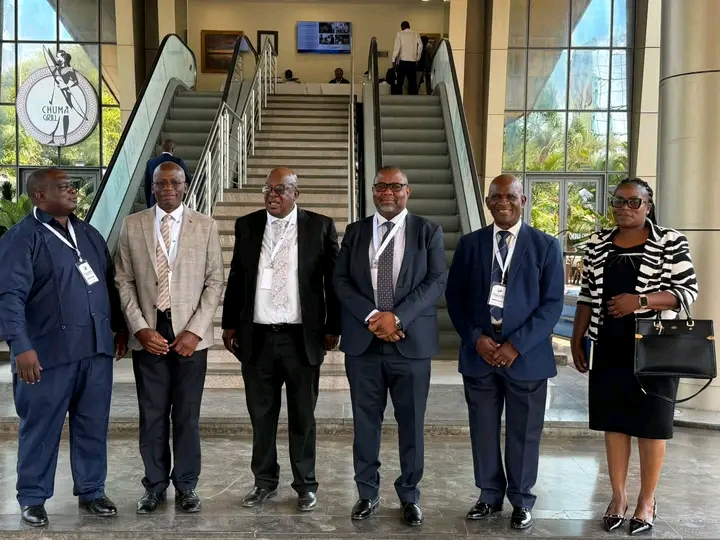
Ministry of Agriculture Permanent Secretary Technical Services John Mulongoti has called for increased investment in science, technology and innovation to transform Zambia’s agriculture and build climate-resilient agri-food systems.
Mr. Mulongoti said modernising agriculture requires Zambia to move beyond traditional production approaches and embrace research, improved technologies, irrigation, mechanisation, climate-smart agriculture, digital solutions, improved seed, soil health management and post-harvest technologies.
He was speaking when he officiated at the second Scientific Conference and Annual General Meeting of the Agricultural Institute of Zambia, AIZ, held under the theme, “Advancing Science, Technology, and Innovation for Climate-Resilient Agri-Food Systems.”
Mr. Mulongoti said agriculture remains central to Zambia’s economic transformation, food and nutrition security, employment creation, poverty reduction, rural development and export growth.
He, however, noted that the sector continues to face challenges including climate change, droughts and floods, pests and diseases, changing markets and the need to produce more from limited resources.
Mr. Mulongoti said there was therefore a need to change the way agriculture is practised by applying science, technology and innovation to increase productivity, strengthen resilience, reduce losses and improve competitiveness.
He said agricultural research must respond to the real challenges faced by farmers, while technologies developed through research should be affordable, accessible and suitable for local conditions.
“Research must move from the laboratory to the farm, from innovation to commercialisation and from commercialisation to impact,” Mr. Mulongoti said.
He said the success of agricultural research should not only be measured by the number of research papers produced, but also by the number of farmers adopting new technologies, increased productivity, jobs created, investments mobilised and value added to agricultural commodities.
Mr. Mulongoti further emphasised the need to align agricultural research, professional services, policies, investments and farming practices with the Grow Zambia Agenda and the Presidential agricultural production targets for 2031.
The targets are 10 million metric tonnes of maize, three million metric tonnes of soyabeans, one million metric tonnes of wheat and one million metric tonnes of sugar annually.
He said achieving these targets would require greater productivity rather than simply expanding the area under cultivation.
The Permanent Secretary also called for stronger private sector participation in agricultural production, input supply, irrigation, mechanisation, storage, processing, financing, digital agriculture, research and export development.
He said Zambia must move from predominantly producing raw commodities to creating greater value through processing, value addition and stronger links to regional and international markets.
Mr. Mulongoti further highlighted the importance of professionalising agriculture, saying modern farming requires specialised expertise in areas such as agronomy, agricultural economics, soil science, irrigation, engineering, mechanisation, biotechnology, climate-smart agriculture and digital agriculture.
He said agricultural professionals must continuously upgrade their skills to keep pace with emerging technologies, including artificial intelligence, remote sensing, precision agriculture and data-driven decision-making.
Mr. Mulongoti urged conference participants to ensure that their deliberations result in practical and measurable solutions that can contribute to Zambia’s agricultural transformation.
He called on researchers and academia to generate knowledge and technologies aligned with national priorities, agricultural professionals to provide quality and evidence-based services, the private sector to invest and create jobs, farmers to embrace productivity-enhancing technologies, and cooperating partners to support national priorities.
He also stressed the need to protect Zambia’s natural resource base through sustainable agricultural practices, including climate-smart agriculture, irrigation, soil management, water harvesting and the use of resilient crop varieties.
Mr. Mulongoti said agricultural transformation cannot be achieved by Government alone, but requires collective action by farmers, agricultural professionals, researchers, academia, the private sector, cooperating partners and other stakeholders.
He encouraged the AIZ conference to serve as a catalyst for action by using science to inform policy, technology to improve productivity, innovation to create opportunities, private investment to scale solutions and professionalism to deliver results.
Mr. Mulongoti commended the Agricultural Institute of Zambia for providing a platform for agricultural professionals, scientists, researchers, Government, the private sector and other stakeholders to engage on issues affecting the sector.