
Diplomatic Startup”: Russian Academic Presents New Model for International Cooperation at National Forum
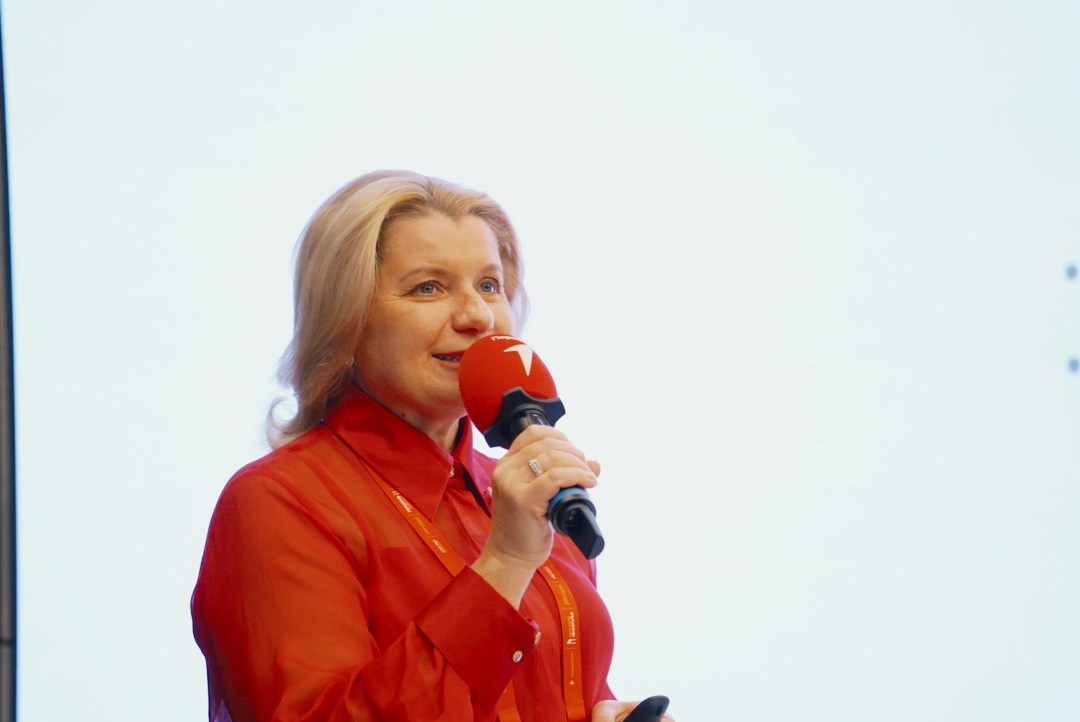
MOSCOW, December 7, 2025 – A new approach to international cooperation built on digital dialogue, networked partnerships, and real-time problem solving was unveiled yesterday at the National Patriotic Forum by Russian academic and international development expert Inga Koryagina, Associate Professor of Marketing.
Presenting what she termed a “Diplomatic Startup” model, Koryagina outlined how modern international cooperation can move away from formal monologues and instead be driven by direct digital communication, collaborative networks, and practical outcomes.
Opening her presentation, Koryagina told delegates that the transformation of diplomacy begins with something as simple as a message on a mobile phone.
“Today we will talk about a model that turns a simple request on your phone into a real international result,” she said.
According to the model, communication is no longer centered on broadcasting information but on creating active dialogue and sustainable networks. Koryagina emphasized that the process begins with a single message in a messenger platform, which then evolves into a structured chain of human connections and resources.
She illustrated the model using the example of a foreign entrepreneur seeking market access.
“We become their personal navigator in the market. Together we create a roadmap where every step is a specific person or resource. Our goal is for the connection between partners to become independent and develop without us,” she explained.
Turning to higher education, Koryagina said universities are no longer just academic platforms but potential launchpads for real business and development partnerships. Rather than importing fixed narratives into institutions, her model begins by identifying the needs of students and local ecosystems.
“We ask: ‘What is relevant for your students?’ And we bring practitioners,” she said, citing a case where a lecture on e-commerce in China resulted directly in a real business request instead of a purely academic exchange.
On the media front, she highlighted a shift from traditional press releases to targeted, story-driven international content that focuses on specific cooperation breakthroughs rather than general country narratives.
“We provide access to those they don’t have access to. We help tell a story not about a country in general, but about a specific breakthrough,” she said.
Koryagina stressed that the core difference of the “Diplomatic Startup” model is its focus on interest alignment rather than self-promotion, where networks grow organically based on real needs rather than pre-set strategies.
“The goal is not to talk about ourselves, but to find a point where your interests and our capabilities overlap,” she told participants.
She concluded with a direct call to action for forum delegates:
“Write. One specific request. Become an active node in our common network. Let’s create the next success story together.”
Her presentation positioned the Diplomatic Startup as a practical roadmap for building international partnerships through dialogue, education, media, and entrepreneurship - rooted in direct communication and sustained human connections.