
DPP Urges Stronger Fight Against Financial Crime
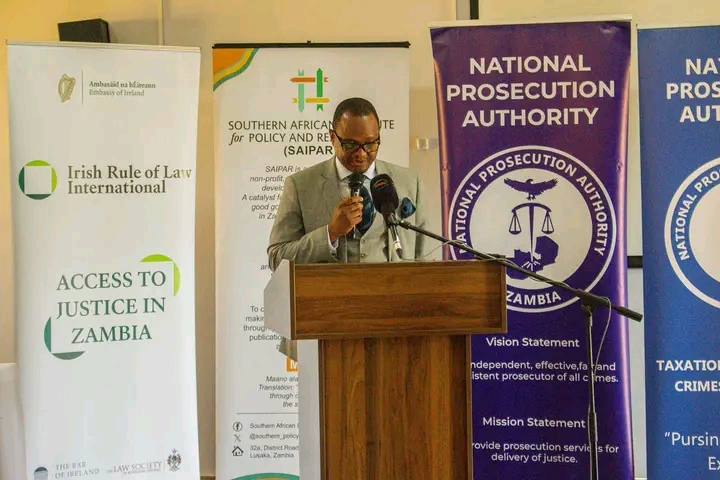
The Director of Public Prosecutions (DPP), Gilbert A. Phiri, has challenged graduates of a pilot course on Financial Crimes Investigations and Asset Recovery to apply their newly acquired skills to strengthen investigations, prosecutions and the recovery of proceeds of crime.
The graduation ceremony brought together 15 professionals from various investigation, prosecution, financial intelligence and law enforcement institutions.
The programme was delivered through collaboration between relevant Zambian institutions, the Irish Government and experts, with a focus on strengthening capacity in financial crimes investigations, asset tracing and recovery, prosecution and addressing increasingly complex forms of organised financial crime.
Phiri emphasised that the success of the programme should ultimately be measured by the quality of investigations conducted, effective analysis of financial intelligence, successful prosecutions and the recovery of proceeds of crime.
He noted that technological advancement has created new opportunities for criminals to conceal, transfer and move illicit proceeds through complex financial structures, digital platforms, multiple accounts and transactions across jurisdictions.
The DPP therefore called for continued investment in specialised skills training, inter-agency collaboration and international cooperation to strengthen the country's response to financial organised crime.
The graduates were also urged to uphold high standards of integrity, professionalism, objectivity and respect for due process, while sharing their newly acquired knowledge with colleagues and contributing to stronger institutional capacity.
Meanwhile, Irish Ambassador to Zambia Aidan Fitzpatrick highlighted the importance of inter-agency and international cooperation in combating sophisticated forms of crime.
The Ambassador said the complexity of financial organised crime requires institutions to share expertise, intelligence and experience while strengthening coordination across agencies and jurisdictions.
He also shared Ireland's experience in responding to serious and organised crime and encouraged the graduates to put their knowledge into practice through stronger investigations, more effective prosecutions and improved asset recovery.
The graduation marked the beginning of the graduates' responsibility to use their expertise to strengthen investigations, pursue proceeds of crime and contribute to a more coordinated national response to organised financial crime.